The JEONJU International Film Festival (JEONJU IFF, Festival Co-Directors MIN Sungwook and JUNG Junho) announced the selections for the Korean Competition for Shorts and Local Cinema.
The 27th JEONJU IFF Korean Competition for Shorts received a total of 1,494 submissions between November and January. From these, 30 films were selected for the competition, including 27 World Premieres, 1 Asian Premiere, and 2 Korean Premieres. In terms of genre, the selection consists of 20 fiction films, 4 experimental films, 3 documentaries, and 3 animated films.
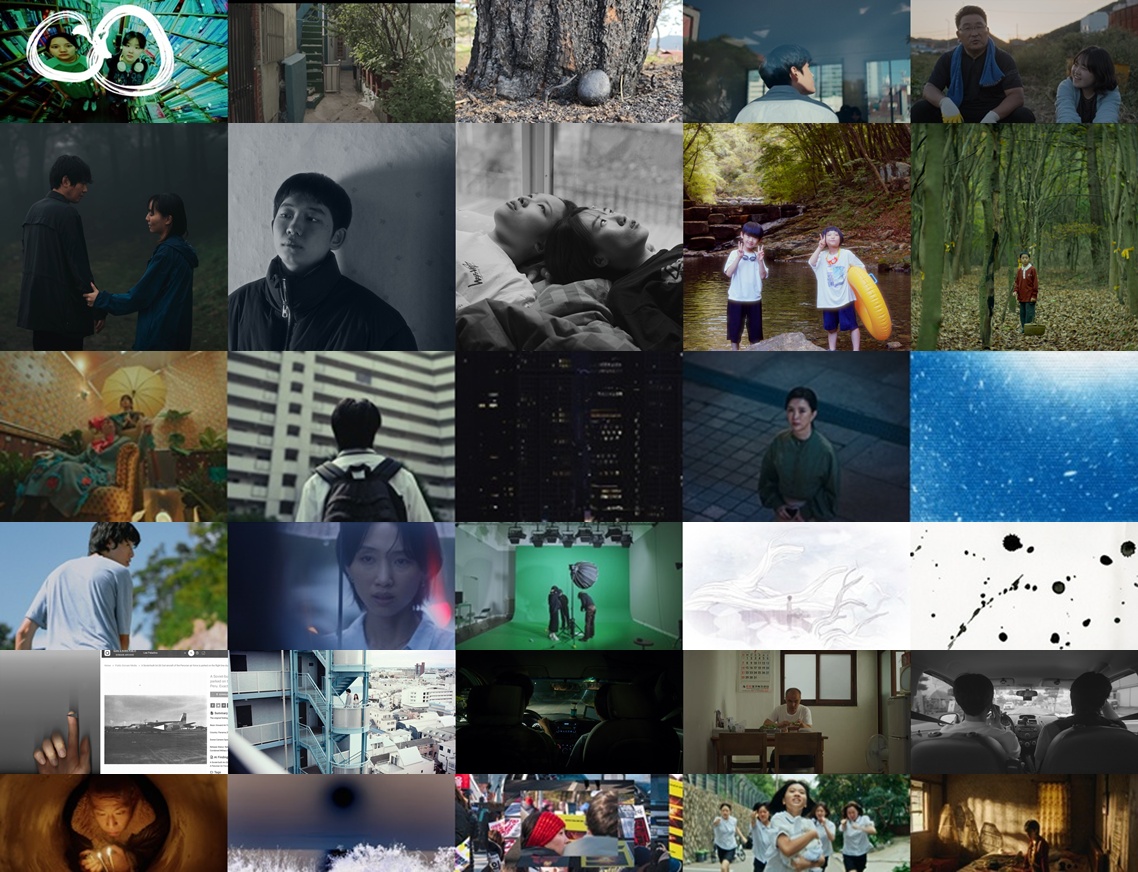 |
△ Korean Competition for Shorts Still Images
(See table below. Listed in Korean alphabetical order.) |
The Preliminary Jury for the Korean Competition for Shorts was composed of seven members: director KIM Byeonggyu; actor KIM Hyeonmok; film critic MOON Juhwa; director LEE Ran-hee; writer-director JEONG Yeoreum; director CHO Hyun-suh; and MOON Seok, programmer of the JEONJU IFF.
KIM Byeonggyu co-directed The Walk (2023), which was selected for the Korean Competition for Shorts at the 24th JEONJU IFF. KIM Hyeonmok received the Best Actor Prize in the Korean Competition at the 26th JEONJU IFF. Film critic MOON Juhwa debuted after receiving the 2024 Cine21 Film Critic Award and has since been active across a range of cultural institutions and events, including Art Sonje Center, the Gwangju Biennale, the Busan Biennale, and the Busan International Film Festival. Director LEE Ran-hee’s The Final Semester (2024) won the Best Picture at 45th Korean Association of Film Critics Awards and the Best Screenplay at the 29th Chunsa International Film Festival. Writer-director JEONG Yeoreum received the 15th Doosan Yonkang Arts Award and directed Graeae: A Stationed Idea (2022), which screened at the 21st JEONJU IFF Korean Competition for Shorts. Director CHO Hyun-suh’s Winter Light (2024) won the Grand Prize in the Korean Competition at the 26th JEONJU IFF.
Commenting on this year’s selection, the juries stated, “the jury agreed to select films that do not remain within the comfort of self-sufficient pleasure, but instead explore unfamiliar worlds, break through them, and imagine what lies beyond.” They added, “We extend our gratitude and respect to all who submitted their precious films.”
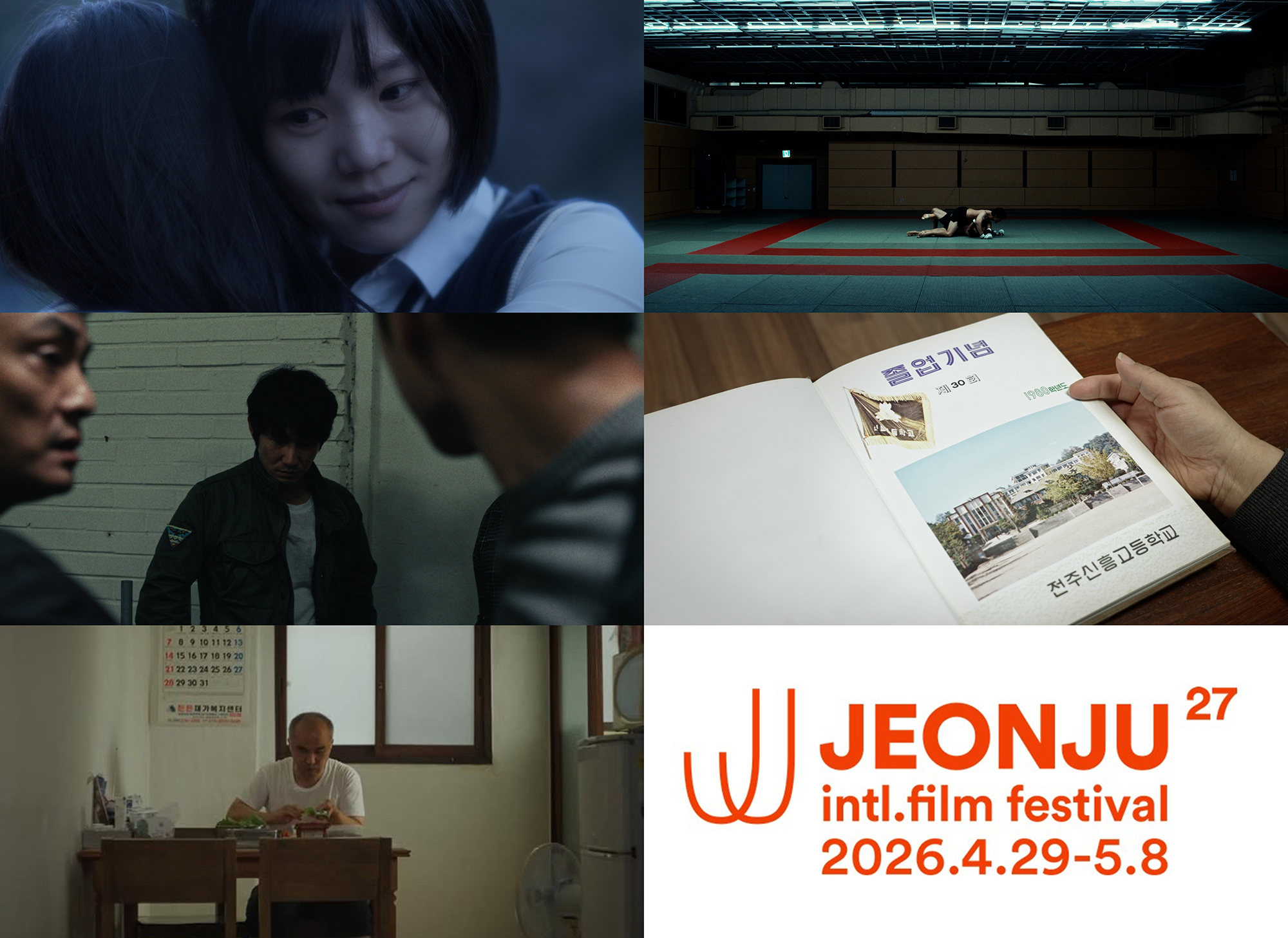 |
| △ Local Cinema Still Images (See table below. Listed in Korean alphabetical order.) |
Meanwhile, the Local Cinema selections, dedicated to filmmakers and producers based in Jeonbuk State, university students from Jeonbuk, or films where at least 50% of the shooting locations in Jeonbuk, received a total of 49 submissions, including both short and feature-length films.
From the submissions, five films were selected: four fiction shorts and one documentary feature. The selected short films are Walking in a Spiral (LEE Soeun), Scramble (LEE Handeul), Crack of dawn (LEE Seungchan), and The garden plot (NOH Donghyun). The feature selection is The Yearbook: Waiting for the Teacher (KIM Jongkwan), the only documentary among the five titles. All five films will make their World Premiere at the festival.
The Preliminary Jury for Local Cinema consisted of three members: director KAM Jeongwon, whose film Stars and Sand (2025) won the Grand Prize at the 51st Seoul Independent Film Festival and whose previous work The train passed by (2021) was selected for the 22nd JEONJU IFF Korean Competition; director and president of the Gangwon Independent Film Association PARK Juhwan, whose film Graduation (2018) received the Best Prize in the Feature Competition at the 44th Seoul Independent Film Festival; and CHOI Jina, Manager of the Program Team(Korean) at the JEONJU IFF.
Reflecting on this year’s selection, the Preliminary Juries for Local Cinema remarked,“It was an opportunity to recognize the steady workflow of the local creators and to realize the contemporary issues at hand.” They added, “We have once again confirmed that Local Cinema are not on the fringes of the mainstream industry, but rather an avant-garde space to experiment with new senses and questions.”
The 30 films selected for the Korean Competition for Shorts and the five Local Cinema selections will be screened at the 27th JEONJU International Film Festival, taking place across Jeonju City from April 29 (Wed) to May 8 (Fri), 2026.
Commentary on Korean Competition for Shorts
In one of his late interviews, Orson Welles once spoke of America's obsession with youth. "America is a young country, and the only country that believes it will remain young forever. But it has no idea how to sustain the youth, and how to embrace life once youth has come to an end." From Citizen Kane, his debut film that he both acted and directed, Welles portrayed an old man's life at the age of twenty-six. Perhaps he wished to disrupt the ecology of Hollywood, which celebrates nothing but youth. By coincidence, Roland Barthes, born in the same year as Welles, suffered a recurrence of tuberculosis in the very year Welles completed Citizen Kane, and spent much of his youth in sanatoriums. In his later years, Barthes left an interesting complaint in his diary after a visit to a cinema. “I went to the movie theater. Either not a single film attracted me, or the ones that seemed right had already begun. Eventually, there was a film by Pialat being screened, about teenagers of the age around their university entrance test. (…) The film had something like a form of discrimination that privileged youth. (I felt that an older spectator like myself was absolutely excluded.)”
We began this jury statement with what may seem like an abrupt digression. In 2026, 1,494 films were submitted to the Korean Short Film Competition at the JEONJU International Film Festival. While the jury was deeply engaged by the diverse personalities and compelling craftsmanship of the submitted films, we also came to think of a certain kind of 'discrimination' embedded within Korean short films. Short films are made primarily within and around film schools, or in alternative filmmaking classes and workshop environments, and readily reflect the concerns faced by the young generation and the sensibilities of youth. But, as Orson Welles has asked, how are we to sustain this youth? How should we come to terms with the life cycles that follow once youth has ended? Or, as Roland Barthes has complained, should we acknowledge that Korean short films have a culture that privileges youth while excluding the old age? Even if these questions feel uncomfortable, the jury believes they are important. For they are not directed at short films alone, but are also reflective questions aimed at Korean film culture in general, one in which cinematheques, film festivals, critical writing, and cinephile communities are often understood as privileges enjoyed only by the young, from which one is expelled the moment one begins to age.
The youth of short films cannot be reduced to a handful of traits found on screen. Immature characters unable to move beyond the radius of family and school, lethargic and fragile selves and voices, and events and narratives unfolding within physically confined spaces often come to represent modern day youth.. but this is not all. Young short films appear excessively anxious. They often seem gripped by an obsession with careful calibration and refinement. They are anxious if the film may fail to gain empathy from festivals or funding bodies, that audiences may not understand the story being conceived, or that the characters and scenes captured by the camera may unsettle someone’s sensibility. The jury also found itself concerned that short films may be becoming, not an unstable media through which imperfectly formed questions are posed to the world, but rather a closed form of play, an exchange of pre-set signals and expressive codes among a small group of (young) consumers. Short films are not spaces meant for neatly structured narratives with clear storyline structure. Nor are they spaces for sharing safely agreeable themes, or for submitting portfolios that showcase technical polish. If you ask what kind of media short film truly is, we must admit that we do not yet have a clear answer. We only remember a few remarkable short films that functioned as mediums for discovering the textures and expressions of worlds still unknown. For this reason, the jury agreed to select films that do not remain within the comfort of self-sufficient pleasure, but instead explore unfamiliar worlds, break through them, and imagine what lies beyond.
Compared to previous years, this year’s submissions featured a large number of films about young children and students. There were also many films that take up a camera and attempt to reflect thoughtfully upon the world before them. What we find interesting, though, is that little short films show the evident influence of a particular director. Don't young short film filmmakers of today inherit anything, turning their gaze toward no external realm, and instead gnawing at the past they have passed through and the present they are confronting? We believe this is not the result of utilizing mediums, easily understood and relatable by those who make and watch films, simply to hide their constricted world. Still, we find ourselves reflecting on a short film ecosystem where films rather uncomfortably coexist with those that imagine what comes after youth and the beyond than settle permanently into 'youth'. We extend our gratitude and respect to all who submitted their precious films.
The Preliminary Juries of Korean Competition for Shorts
KIM Byeonggyu, KIM Hyeonmok, MOON Juhwa, LEE Ran-hee, JEONG Yeoreum,
CHO Hyun-suh, MOON Seok
Commentary on Local Cinema
This year, 49 shorts and features were submitted to JEONJU International Film Festival's Local Cinema selection, and it was an opportunity to recognize the steady workflow of the local creators and to realize the contemporary issues at hand. The screening process was conducted with the broad crisis the Korean film industry is facing in mind, along with the structural conditions of the local film production ecosystem, as well as the relationship between the production environment and aesthetical choices as key criteria.
These days, the Korean film industry is facing difficulties in many ways. Investments have reduced, distribution conditions have altered, and audience traffic has died down. Such conditions are especially influential to local filmmakers. Limited budget, infrastructure, and lack of options in distribution might seem restrictive, but they can also serve as the foundation for experiments in formats and densely developed narratives. The submissions this year reflected these production conditions.
Although many stories dealt with individuals, what surfaced more clearly as a trend was the focus on incidents and phenomenon over the inner psyche of characters. They actively tried to dissect relationships, social psyche, and the sensitivities of specific generations, but rarely did a film have its character come alive with its own language, rhythm, and movement. This may be the result of the filmmakers suffering contemporary anxieties where many feel a sense of disconnection.
Nevertheless, notable changes were evident in this year's Local Cinema submissions.
First off, instead of simply exhausting the region as the background of their story, there were more attempts in exploring it in temporal, cultural, and historical ways. Alleyways, old houses, and disappearing industrial spaces were no longer reenactments of familiar sceneries, but they started to function as devices that evoked a character’s memory, history, and senses.
Second, the “locality” wasn’t something captured by the external gaze, but a subjective viewpoint that initiated from the creator’s own position and experience. Living and working in the region wasn’t reduced or defined as a limitation but a way to build new rhythms and sensitivities. This trend seems to be a positive sign to hint that the local film ecosystem will undergo change in the future.
In addition, works that consciously question the relationship between production conditions and aesthetics were also impressive. Smaller cast, limited spaces and shooting methods weren’t used as compromises, but served as strategies to condense the emotions and relationships of the characters. They created room for emotions through moderations in format, while some attempted to reflect the anxiousness of the current times with its unpolished visuals and improvisation.
Through the process of reviewing the submissions, we have once again confirmed that Local Cinema are not on the fringes of the mainstream industry, but rather an avant-garde space to experiment with new senses and questions. It’s clear more work is necessary with character and setting developments, but it’s also true that there are questions and perspectives that could only derive from this region.
While screening the films, we asked ourselves one more time.
Why do we make films?
We hold up our cameras to record and testify time that cannot be deduced to statistics, disappearing spaces, and the emotional worlds of characters. It is a choice that defies efficiency and speed, but also an attempt to face the light and darkness of human beings living in current times.
We hope that local filmmakers will continue to explore the lives of their characters beyond the surface after starting their careers here. Their responses to why they make films will be the answer to a new future of Korean cinema. We deeply thank all the filmmakers and production staff for their sincere efforts and hard work.
The Preliminary Juries of Local Cinema
KAM Jeongwon, PARK Juhwan, CHOI Jina
The 27th JEONJU IFF Korean Competition for Shorts Selections
※Listed in Korean alphabetical order
| Title |
Director |
Genre |
| Gunju |
LEE Ji-won |
Fiction |
| whale hunting |
RYU Dohyeon |
Fiction |
| Scorched Stone, Rolling |
KIM Seojin, KIM Jihee |
Animation |
| A thread left |
LEE Minhyung |
Fiction |
| The Way We Lean |
YANG Heejin |
Fiction |
| A Letter to Me |
YOO Seung-Heon |
Fiction |
| Only our song |
HAN Yuwon |
Fiction |
| Knock Back |
CHUNG Chanhee Noah |
Fiction |
| Someone's Summer |
Seong Hamin |
Fiction |
| Memil |
KIM Jungmin |
Fiction |
| Metropolitan Ride |
KIM Junyong |
Fiction |
| How to Be Left Behind |
LEE Yesung |
Fiction |
| Mirrorless City View |
KWAK Seoyoung |
Experimental |
| Ban Dal (Half-moon) |
SIN Hae-Sup |
Fiction |
| Missed call |
SON Yeong |
Documentary |
| The Eucharist |
OH Yukyeong |
Fiction |
| Sales log |
KANG Mina |
Fiction |
| Welcome to Set |
BAE Cyan |
Documentary |
| Drift Wood |
LEE Yejin |
Animation |
| Afterimage |
KIM Hanseok |
Animation |
| A Real Christmas |
Justin Jinsoo KIM |
Experimental |
| Cola and Ocha |
HAN Yujin |
Fiction |
| Touch, took |
TAE Ji won |
Fiction |
| The garden plot |
NOH Donghyun |
Fiction |
| Fallen Stock |
LEE Seung-been |
Fiction |
| Post poo drop |
KANG Seungho |
Experimental |
| Phototropism |
LIM Yoon |
Experimental |
| Feminist- Queer- for Korean Democracy |
CHO Youngsue(FDSC) |
Documentary |
| Hana and the Missing Sock |
KIM Minji |
Fiction |
| HAPPILY EVER AFTER. |
SINN Kirin |
Fiction |
The 27th JEONJU IFF Local Cinema Selections
※Listed in Korean alphabetical order
[Feature]
| Title |
Director |
Section |
| The Yearbook: Waiting for the Teacher |
KIM Jongkwan |
Korean Cinema/Feature |
[Shorts]
| Title |
Director |
Section |
| Walking in a Spiral |
LEE Soeun |
Korean Cinema/Shorts |
| Scramble |
LEE Handeul |
Korean Cinema/Shorts |
| Crack of dawn |
LEE Seungchan |
Korean Cinema/Shorts |
| The garden plot |
NOH Donghyun |
Korean Competition for Shorts |
|